












After grooming, brushes are often left in the aisle with dust, hair, and dried mud. Add moisture, a closed lid, and several horses, and a hygiene problem quickly arises. Storing horse grooming accessories hygienically therefore means more than simply throwing everything into a bag after use. Clean utensils, a dry storage place, and a clear separation by horse and area of use are essential.
Why clean grooming equipment is important in the stable
Brushes, curry combs, hoof picks, and sponges have direct contact with coat, skin, and hooves. Hair, dirt, skin flakes, sweat, and moisture accumulate in them. This is normal at first - but if the accessories are stored carelessly and damp for a long time, odors, mold, and germs can develop. Especially with skin problems, scours, fungal infections, or small wounds, no accessory should be used between different horses.
The material suffers too. Damp natural bristles can clump, metal parts on the hoof pick can rust, and poorly cleaned bags can permanently retain odors. Therefore, someone who regularly maintains their grooming equipment not only extends its service life. Daily horse care becomes faster because every part is where it is needed and can be used cleanly.
Storing horse grooming accessories hygienically: The basic rules
The most important rule is: Wet accessories should not be put immediately into a closed compartment. After a wet or particularly dirty grooming session, brushes and hoof picks should first be shaken out, cleared of coarse dirt, and allowed to air dry. Only when they are dry should they go back into the grooming bag or box.
No complicated equipment is needed for daily organization. A bag or box with a sturdy bottom, an easy-to-view main compartment, and separate inner or outer pockets is useful. This makes it possible to separate hard, dirty tools from delicate brushes, grooming products, and clean cloths. An open compartment is practical for quick access in the stable. For transport in the car or trailer, a bag with a zipper can be the better choice, because nothing falls out and the rest of the trunk remains clean.
The location is also important. A grooming bag should not stand permanently on a damp stable floor or be stored directly next to the wash rack. A dry locker, a hook in a well-ventilated area, or a shelf away from splashing water and direct soiling are better suited. If the bag is in the saddle locker, it helps to ventilate it regularly.
Clean first, then organize
Hygienic storage does not start with the bag, but with the quick cleaning after use. Hair can be removed from brushes most easily directly by hand or with a comb. Stubborn dust can be tapped out. If necessary, plastic brushes, curry combs, and hoof picks are washed with warm water and a little mild soap.
Wooden brushes and natural bristle brushes need more attention. They should not be left in water for long, as wood can warp and bristles dry more slowly. Instead, a damp cloth is usually sufficient for the handle and a careful cleaning of the bristles. Afterwards, they are dried with the bristles facing down or sideways in an airy place.
Sponges, wash mitts, and microfiber cloths should never be left damp and crumpled together. These parts especially absorb odors quickly and provide an unfavorable storage place for germs if there is residual moisture. Wash mitts and cloths belong in the laundry after use, sponges must dry out completely. For particularly sensitive areas such as eyes, nostrils, or small injuries, separate, clearly marked cloths are useful.
Grooming bottles also deserve a look. Dirty caps or stuck spray heads can be wiped clean before they go back into the bag. If hoof oil or mane spray leaks, the bag should be cleaned promptly. Otherwise, dust sticks to the inner surfaces and distributes itself on brushes and textiles the next time you pack.
The right organization within the grooming bag
A functional sorting saves time in everyday life. Hard parts such as hoof picks, curry combs, and mane combs belong in a separate compartment or side pocket. Brushes are best placed so that the bristles are not permanently pressed against hard objects. Grooming products should stand upright so that the caps remain sealed.
A small, separate inner compartment for delicate things creates additional organization. For example, clean cloths, disposable gloves, a tick remover, or grooming products for smaller skin areas can be stored there. Especially when children help groom or several people use the same equipment, this separation prevents confusion.
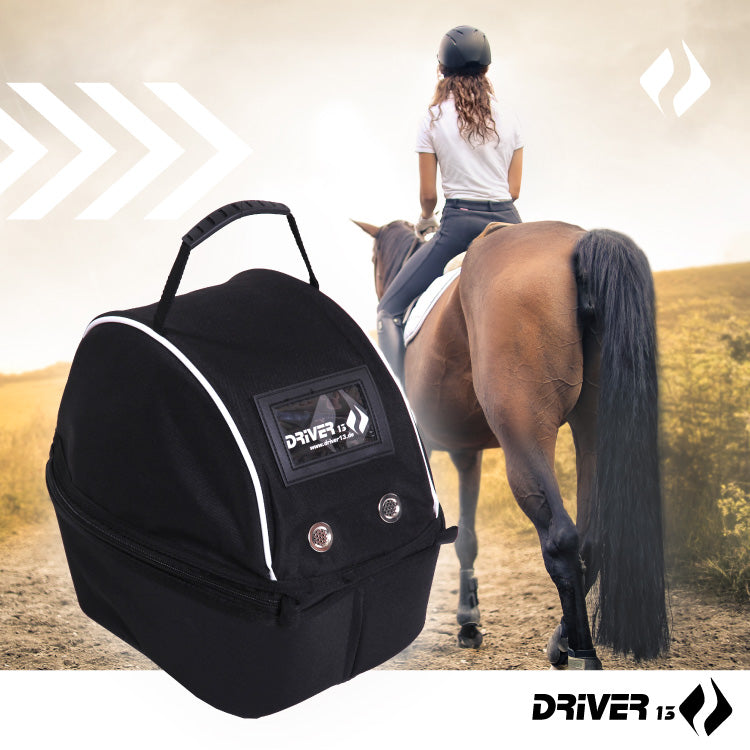
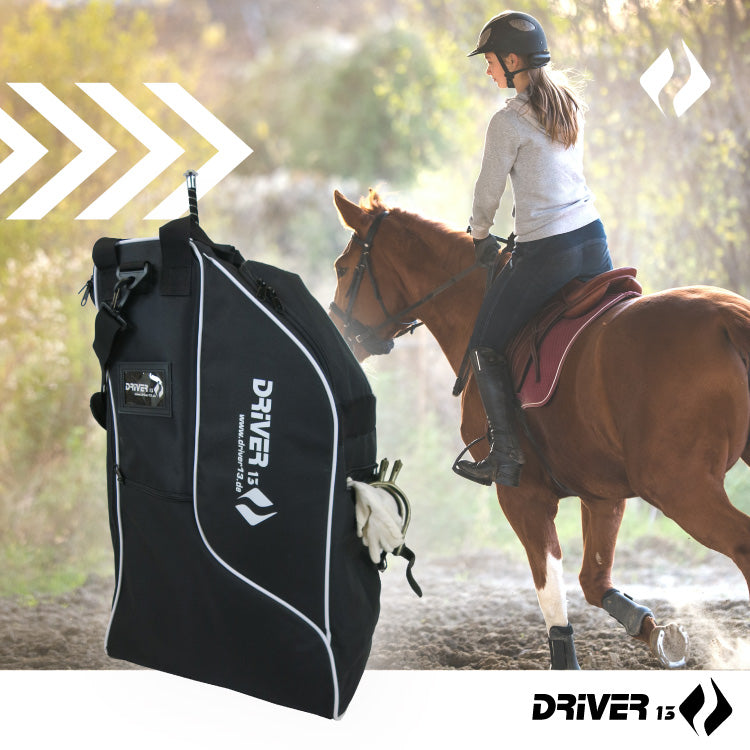
A grooming bag with wipeable inner material is particularly practical in the stable. It can be cleaned much more easily than an unlined fabric bag after spilled products or damp dirt. Driver13 grooming bags are designed for this mobile use: grooming equipment stays bundled, is quickly at hand at the horse, and can be neatly stored after the stable visit.
A set per horse - when this is necessary
Ideally, every horse has its own grooming equipment. This applies especially in stables with changing horses, riding clubs, or lesson operations. Own brushes reduce the risk of transmitting skin problems and parasites through jointly used items. A name label on the bag, brush back, or compartment is a simple solution.
With healthy horses in a private household, accessories are sometimes shared. Then they should be cleaned more frequently and above all not used on horses with noticeable skin areas. If there is a suspicion of fungus, mites, lice, or a contagious skin disease, consistent separation is mandatory. The affected horse receives its own set, which is cleaned and stored separately. In case of doubt, the veterinary practice dictates which hygiene measures are necessary.
For the competition or clinic day, a small reserve is additionally worth it. A second hoof pick, a clean cloth, and a spare brush prevent having to improvise or use someone else's grooming equipment in an emergency.
Properly handling moisture during transport
After a rainy day, a shower, or washing the legs, the temptation is great to quickly pack everything up and drive home. That is exactly when it is decided whether the bag stays fresh or smells musty after a short time. Damp brushes, fetlock boots, or cloths should be transported as separate from dry accessories as possible.
A removable bag for wet parts is practical. At home, this is emptied immediately, the bag remains open, and all contents can dry. For heavily soiled accessories, airing alone is not enough - mud should be removed beforehand. Someone who regularly transports the grooming bag in the car also protects the upholstery and trunk from residual dirt with a solid bottom.
Not every bag needs to be completely washed after every use. A quick visual inspection is usually sufficient: Are there hairs in the compartment, is something stuck to the bottom, is moisture noticeable, or does the material smell unpleasant? Then the right time to wipe it down has come. Always follow the care instructions for fabric bags. Many models can only be cleaned with a damp cloth and should not go in the washing machine.
A fixed routine instead of a big cleaning operation
Hygiene works most reliably when it is divided into small steps. After every use, hair is removed, coarse dirt is shaken out, and damp parts are taken out to dry. Once a week, a close look at brushes, hoof picks, and the inside of the bag is worth it. Once a month, the entire equipment can be emptied, wiped out, and re-organized.
This also reveals things that should be replaced: frayed cloths, cracked plastic parts, stuck spray bottles, or brushes with loose bristles. Fewer, but clean and functional accessories are more helpful in the stable than an overflowing bag where old products and dirt accumulate.
A dry, clearly organized grooming bag does not only make horse care neater. It ensures that you can work immediately with clean accessories at the grooming area - regardless of whether it is for daily grooming, training, or a competition.


