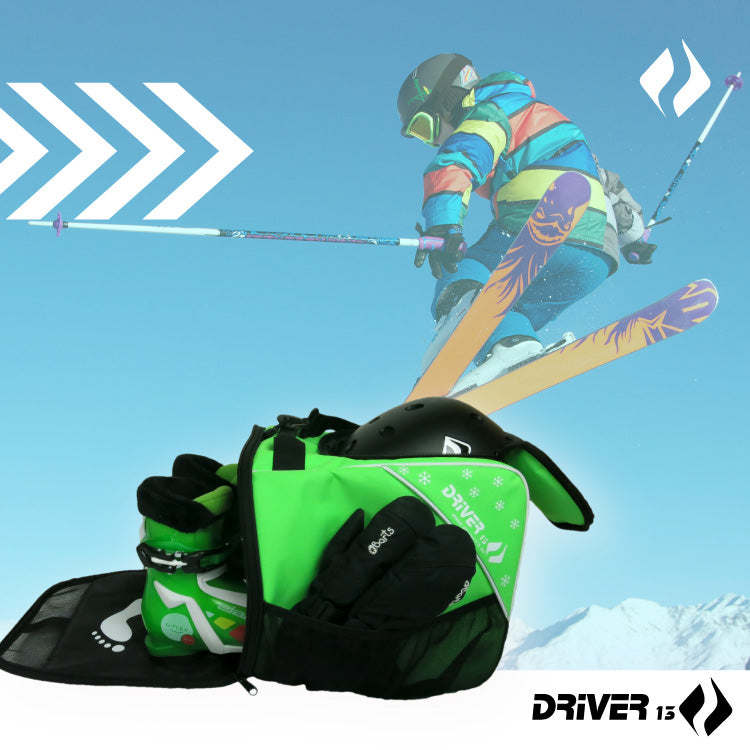
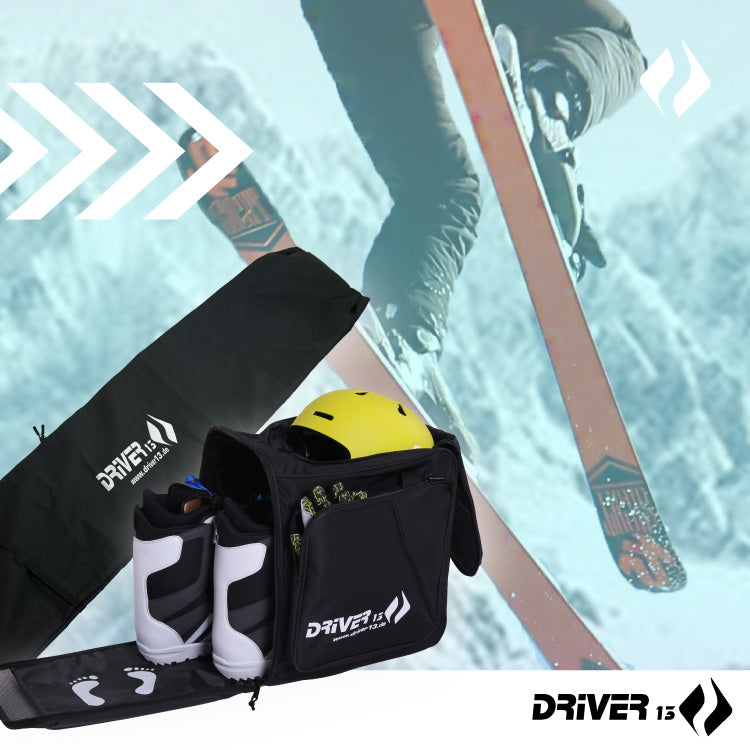
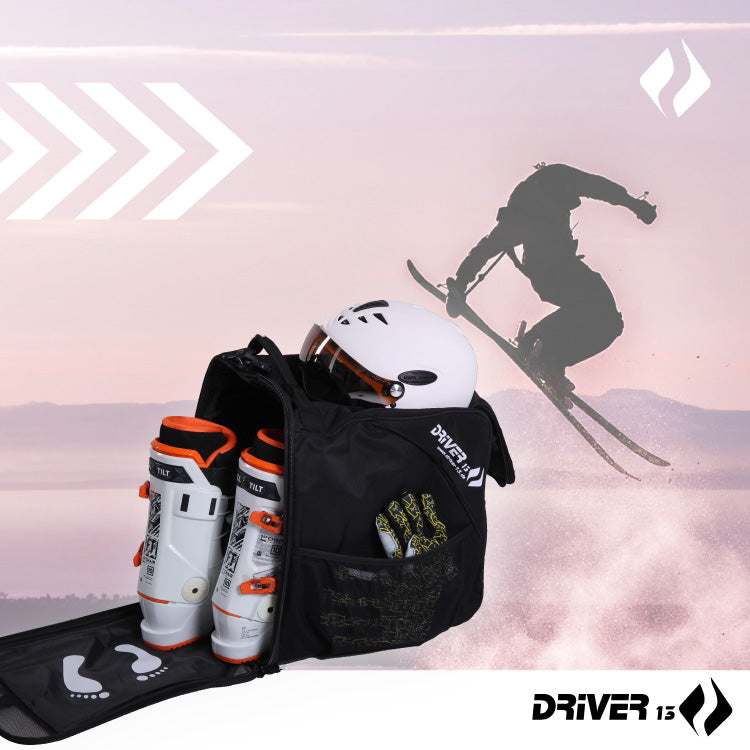

Wet ski boots in the trunk, melting snow on the back seat and gloves that only resurface at the hotel: That is exactly what a ski boot bag is made for. This guide to choosing a ski boot bag helps you select the right bag for its intended use—whether for the drive to the ski resort, a flight-based holiday, or regular days on the slopes.
A good bag does more than simply carry two ski boots. It keeps damp equipment separate from clothing, keeps accessories within easy reach, and remains comfortable to carry even when loaded with a full set of winter gear. The right design depends primarily on how you travel, how much additional equipment you need to carry, and whether the boots end up back in the car immediately after a day on the slopes.
First, determine how you will use the ski boot bag
For an occasional ski holiday, a compact ski boot bag with a main compartment for a pair of boots is often sufficient. Those who travel by car and mainly carry the bag between their accommodation, parking area, and the lifts will benefit from a simple, straightforward solution. A sturdy zipper, a durable base, and a handle that remains comfortable to grip even when carrying heavy boots are important.
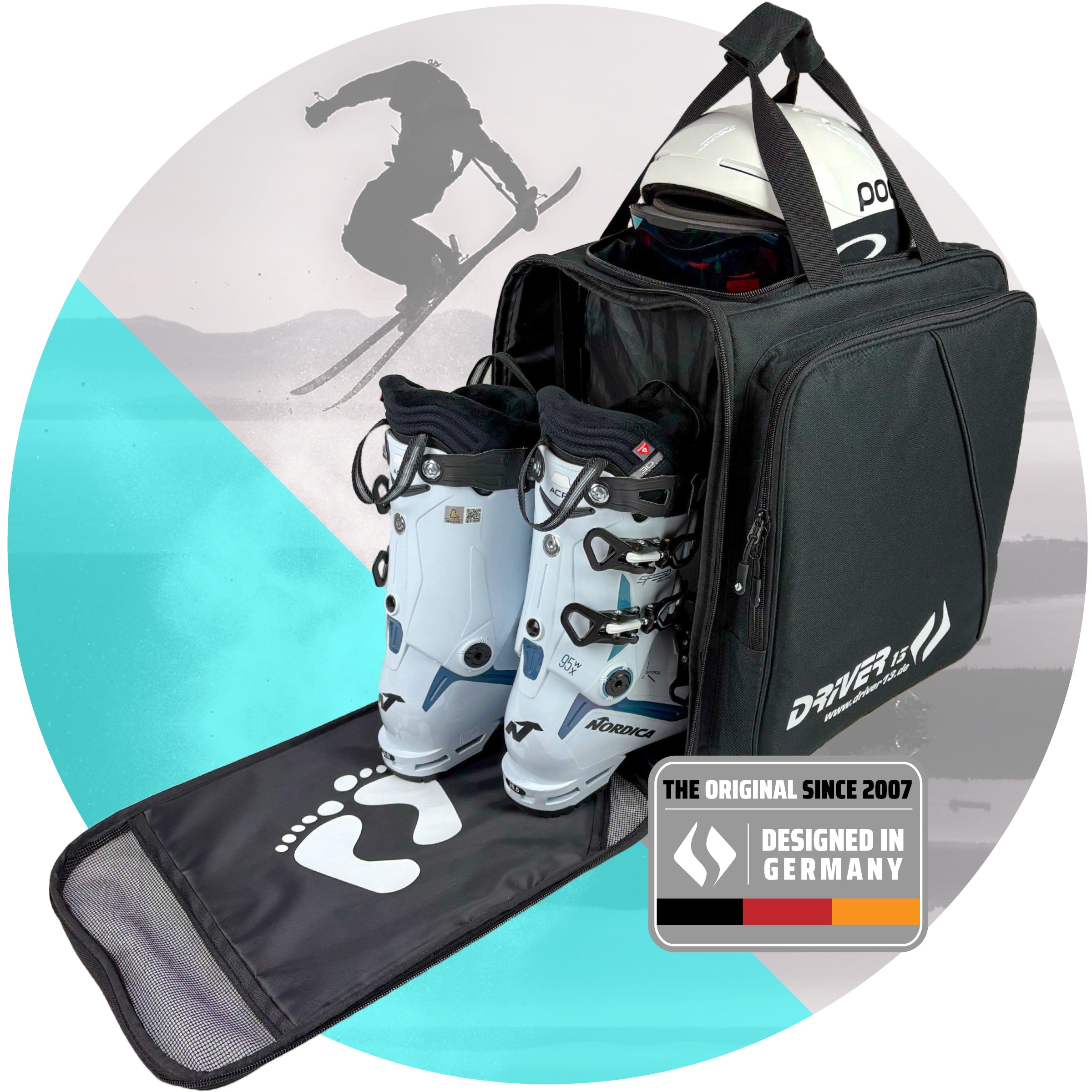
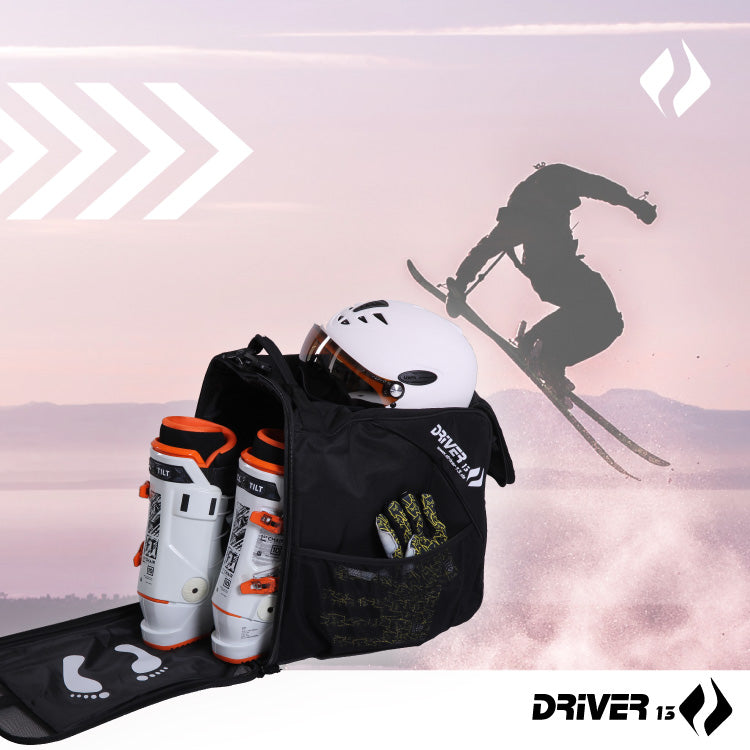
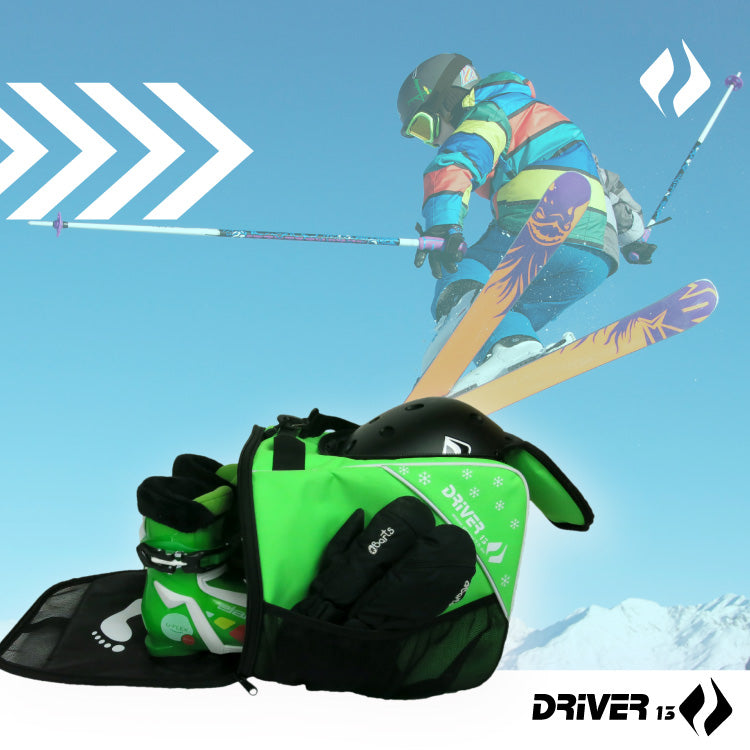
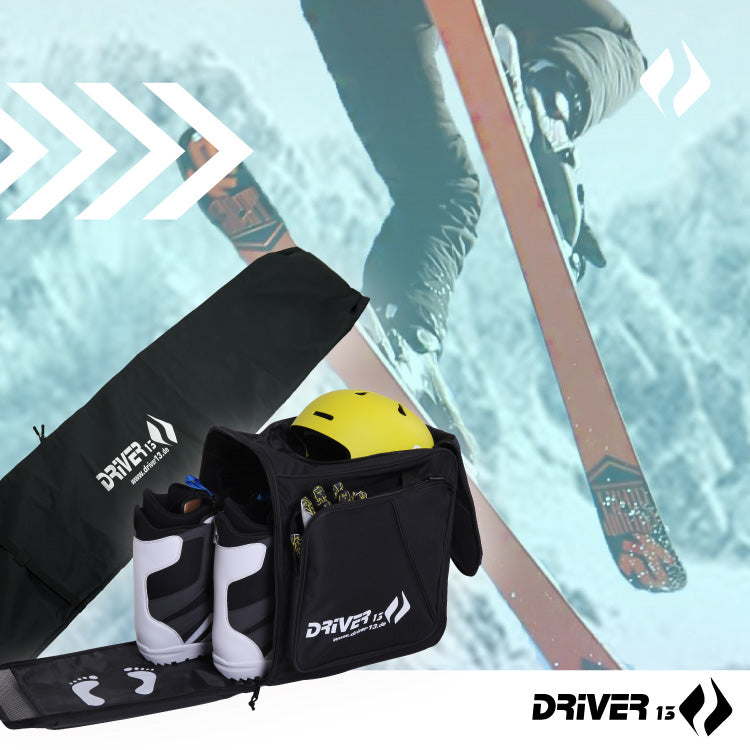
Things are different when ski boots, a helmet, ski goggles, gloves, and a change of clothes all need to be transported together. In this case, a model with separate compartments saves time and prevents delicate items from being squeezed between hard ski boot shells. Families know this situation well: Several bags need to be carried from the car to the accommodation, children need their equipment quickly, and nothing should get lost. A well-thought-out compartment layout is often more valuable than the largest possible main compartment.
For train travel, air travel, or longer journeys around the ski resort, a ski boot backpack may be the better choice. It keeps your hands free, distributes the weight more evenly, and is more practical on stairs, snowy paths, or when changing transport than a bag that must be carried at all times. For this purpose, the back system should be properly padded, and the shoulder straps must be securely adjustable.
The right size: Ski boots are not all the same
The bag's dimensions should not only fit the size of the boots but also their shape. Men's models with wide shells, freeride boots, or boots with multiple buckles require more space than compact women's or children's models. A bag into which the boots fit only with pressure puts unnecessary strain on the equipment and the zipper.
Measuring is rarely necessary, but taking a realistic look at your own equipment is. If the ski boots are the only thing being carried, a suitable boot compartment with a little extra room is enough. If a helmet and accessories need to be carried as well, you will need either a separate helmet compartment or a main compartment with sufficient volume. A helmet should not have to be hung loosely on the outside if it needs to be protected on longer journeys.
However, too much volume also has its disadvantages. In an oversized bag, boots and accessories can slide around, small items are more likely to get lost, and the bag becomes unnecessarily bulky. If you are only carrying ski boots and gloves, a compact solution is usually the better choice. If you regularly travel with a full set of equipment, you should consciously choose a larger model with a clear internal structure.
Helmet compartment, accessories compartment, or large main compartment?
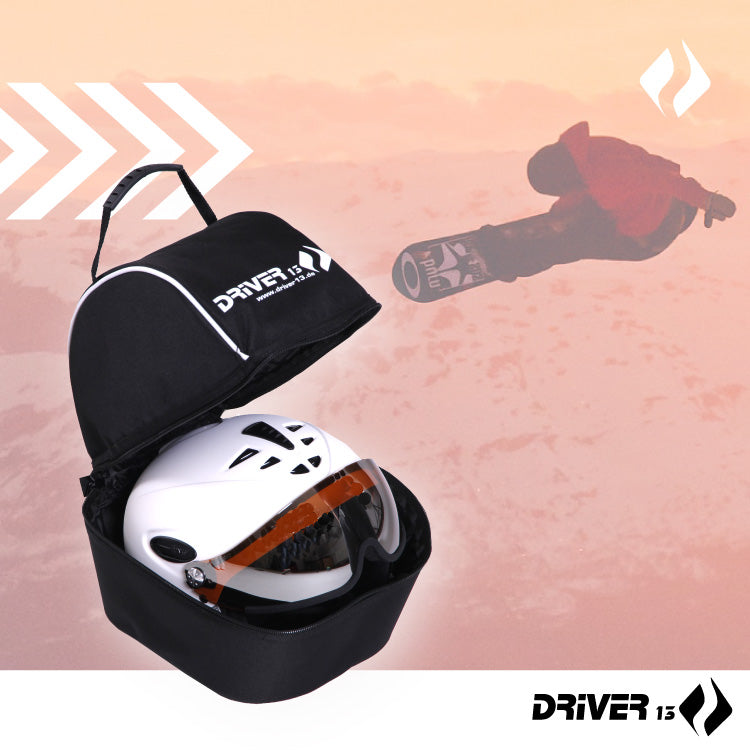
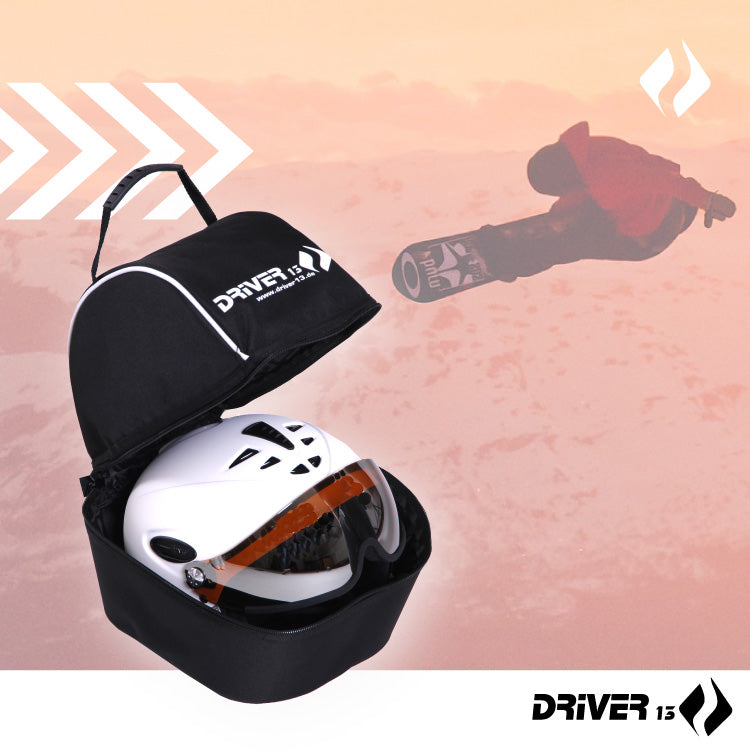
A separate helmet compartment protects the helmet and ski goggles from pressure points caused by buckles and boot soles. This is particularly useful if the helmet is frequently carried or if the bag is surrounded by other equipment in the car. A small accessories compartment for a lift pass, spare socks, tools, or sunscreen keeps items handy so you do not have to search for them on the slopes.
A large main compartment, on the other hand, can be the right choice if you want to pack flexibly or regularly store clothing alongside the boots. The downside: Without dividers, damp items will lie next to clean ones. In this case, inner pockets or dividers that at least separate goggles, gloves, and personal items are more practical.
Moisture and ventilation determine everyday use
Ski boots rarely return dry. Snow collects on the shell, the inner lining absorbs moisture, and gloves or socks may also be wet. A ski boot bag should therefore have an easy-to-clean interior and not allow moisture to pass directly through to the vehicle floor, accommodation bag, or other luggage.
A water-repellent outer fabric and a reinforced, wipe-clean base are particularly useful for winter transport. The bag will be placed on wet parking lots, in ski lockers, or in the trunk. This is where it becomes clear whether the material is designed for such use or only works when stored in dry conditions.
Ventilation openings help to release trapped moisture. However, they are no substitute for drying the ski boots after a long day on the slopes. If you leave the boots in a closed bag overnight, you risk unpleasant odors and a damp inner lining the next morning. A better routine: Open the boots after returning, take them out if necessary, and allow the bag to air out as well.
The benefits of a heated ski boot bag depend on your personal routine. It can be very helpful on cold morning drives or on days when you ski multiple times without a good drying option. However, it requires electricity, costs more, and is not essential for anyone who can dry their boots in a heated ski room.
Carrying comfort: From the car door to the gondola station
Two ski boots add considerable weight. A helmet, clothing, and small items add to this. A simple handle is sufficient for short distances, but it should be wide, securely sewn, and comfortable to grip. For longer distances, shoulder straps or backpack straps are significantly more comfortable.
A shoulder strap is suitable if the bag is mainly carried from the parking area to the accommodation. Pay attention to a padded shoulder pad and an adjustable length. A ski boot backpack is the better solution if you frequently climb stairs, use public transport, or need to carry skis, poles, or additional luggage as well.
Stability is also crucial. A fully packed bag should not tip over every time it is set down. A shape-retaining base and a design that keeps the boots securely in place make packing and unpacking easier. Especially when your hands are cold or you are wearing gloves, a bag that works without readjustment is invaluable.
Carefully check the material and workmanship
The best compartment layout is little help if the seams, zippers, or straps cannot withstand the weight. Certain areas of a ski boot bag bear a particularly heavy load: handles, shoulder strap attachments, base edges, and zipper pulls. These areas should be neatly finished and designed for frequent opening and heavy luggage.
A durable outer material protects the bag from abrasion caused by ski boot shells, the edges of other equipment, and rough surfaces. Nevertheless, even a high-quality bag will remain functional longer if snow and dirt are removed after use. Allow it to dry open and check before your next trip whether moisture or sand has collected in the base area.
Zipper pulls should be large enough to be easily gripped even with cold fingers. Very small zippers may initially seem inconspicuous, but they quickly become impractical when packing with gloves. A smooth-running zipper is not only a matter of comfort; it also prevents constant pulling on the material and seams when closing the bag.
Guide to choosing a ski boot bag: These questions help
Before buying, it is worth briefly comparing the bag with your own winter sports routine. The following points quickly highlight the differences between similar bags:
- Are you carrying only ski boots, or also a helmet, ski goggles, gloves, and clothing?
- Are the distances short, or is a backpack system practical for train travel, the airport, and longer journeys?
- Do the boots frequently get wet in the bag, and therefore do you need an easy-to-clean base and ventilation?
- Does the bag need to accommodate children's boots, wide ski boot shells, or particularly large helmets?
- Should the equipment remain separate from clean clothing and delicate items in the car?
Driver13 develops sports bags for exactly these types of journeys: equipment should remain protected, kept cleanly separate, and accessible without unnecessary detours. The key is not to cram as much as possible into a bag, but to choose one that suits your equipment and your journey to the mountains.
Pack the ski boots as a trial run before your first trip. If the helmet, goggles, and gloves each have their own place, the bag stands securely, and it is comfortable to carry, you have chosen the right bag for everyday winter use.