


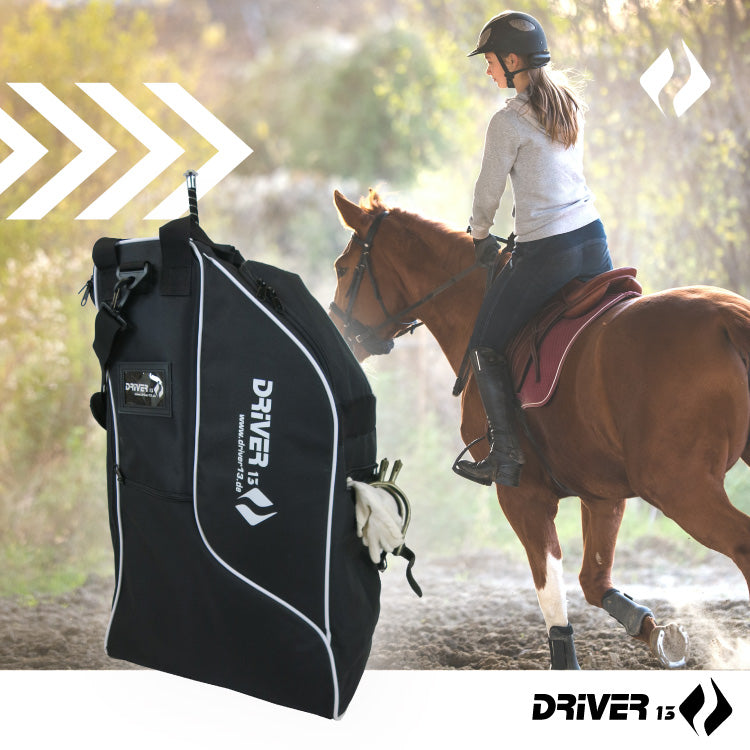
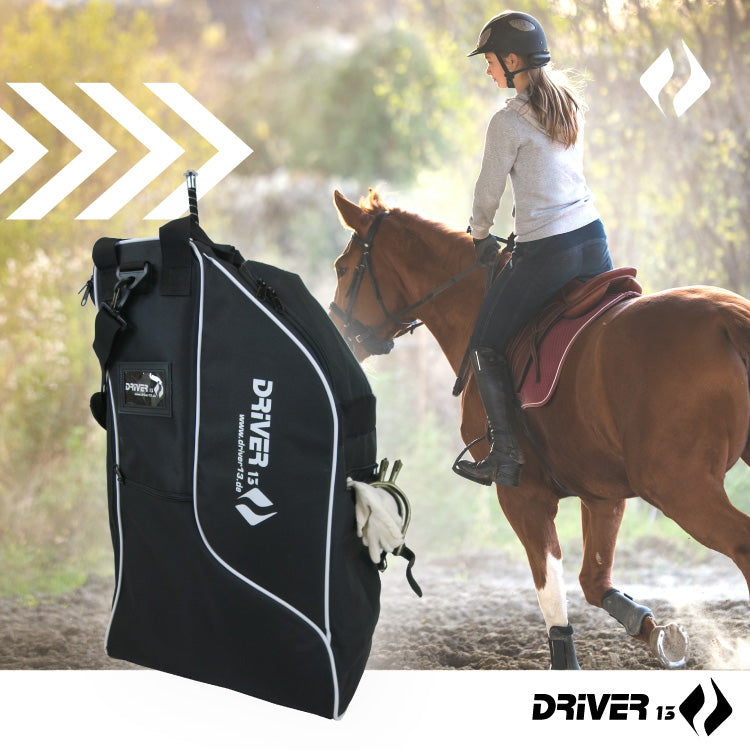
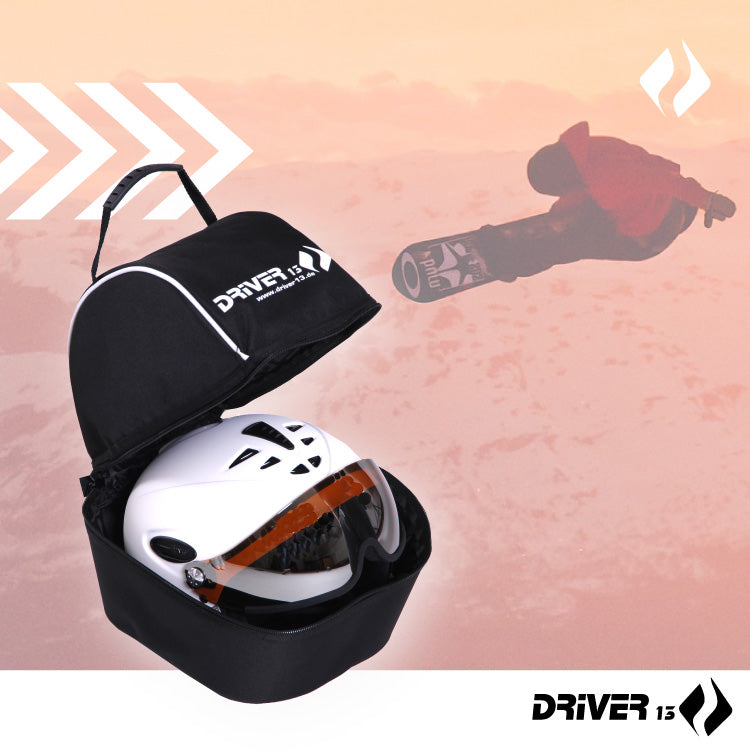
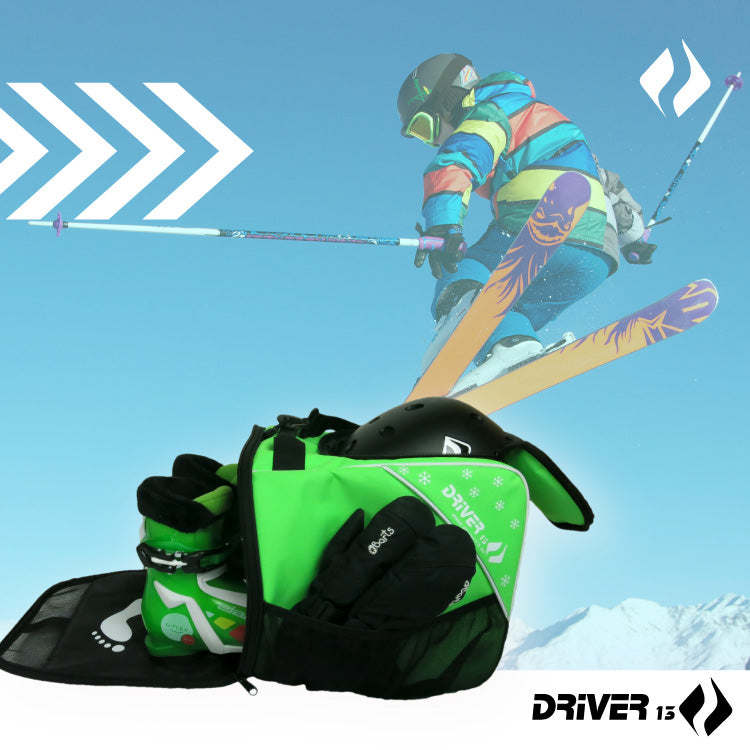
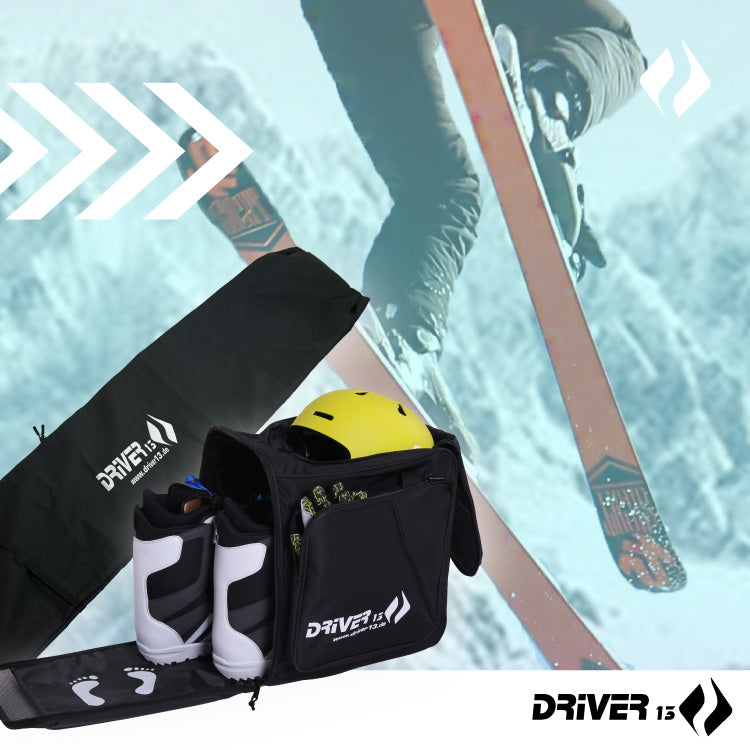
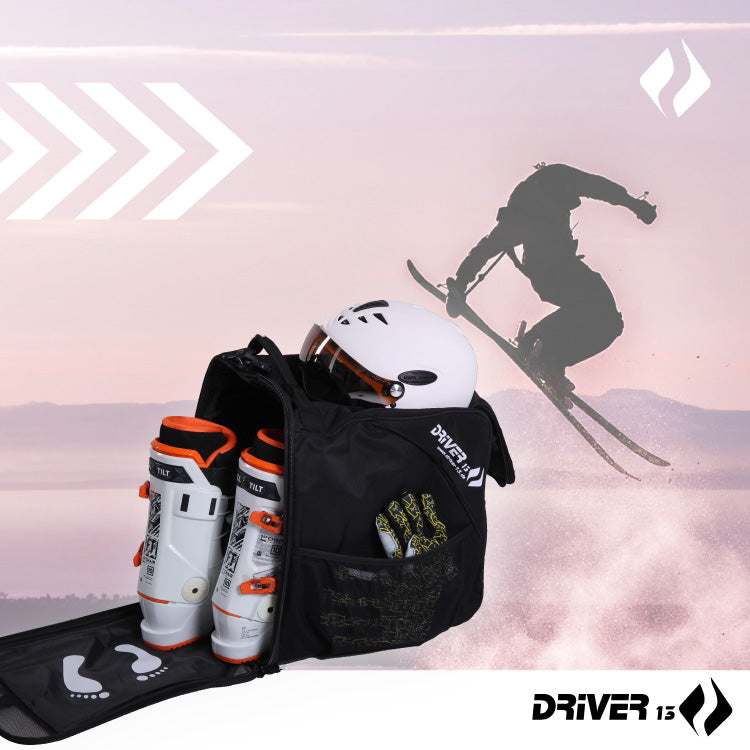
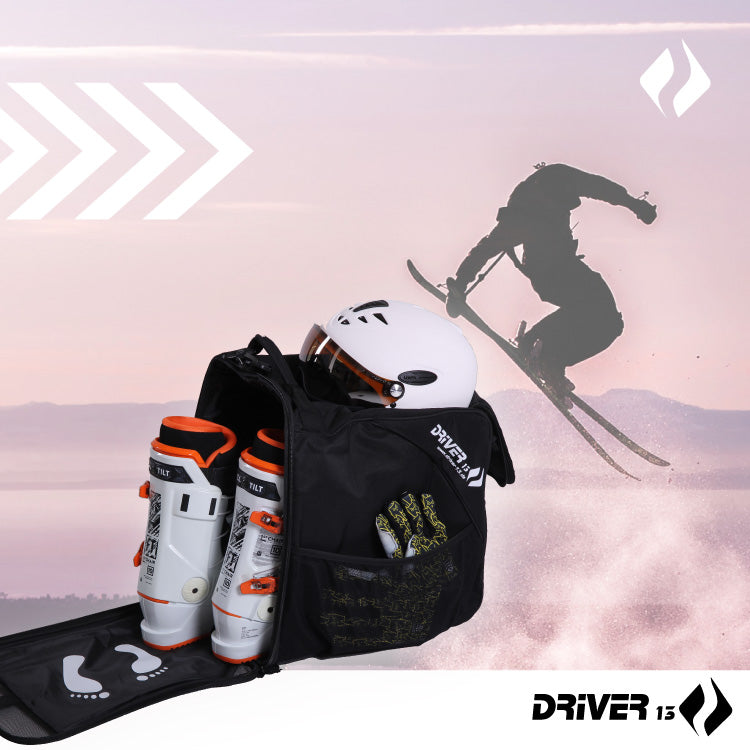

After training, riding boots are rarely just dry and clean. Sand on the soles, dust on the shafts, and moisture after a wet arena are part of everyday life. A riding boot bag creates a clear separation: the boots stay protected, the car and the rest of the equipment stay cleaner, and everything is quickly at hand on the way to the stable.
Anyone who rides regularly doesn't need just any sports bag. Riding boots are long, hold their shape, and are often more sensitive than they appear at first glance. A suitable bag therefore takes shaft height, sole shape, fasteners, and the conditions around the stable, tournament, or riding lesson into account. It is not enough that both boots fit inside. It should make transport easier and protect the equipment effectively.
Why a riding boot bag makes sense
Riding boots are often transported between the home, stable, riding hall, and tournament. Without a separate bag, dirt quickly ends up in the trunk or on clothing. At the same time, the boots rub against other items, such as a grooming box, spurs, or water bottle. Especially with leather boots, scratches and pressure marks can impair the appearance and make care more demanding.
A riding boot bag keeps the equipment in one place. This saves time in the morning and reduces the search for individual boots before the lesson. The solution is also practical in the locker or saddle cabinet: the boots stand or lie protected, instead of getting loose between blankets and saddle pads.
For children and teenagers, the organizational advantage is particularly clear. When the riding helmet, clothing, and boots each have their own dedicated transport solution, the equipment can be packed independently. Parents have less to check before departure to see if one boot is in the hallway and the other is already in the car.
Riding boot bag: the right size matters
The most important question before buying is: Does the bag really fit your boots? Tall dressage boots require significantly more height than short boots with chaps. Wide soles, a wide shaft, or very large shoe sizes can also affect the necessary space.
For tall riding boots, measure the total length from the sole to the top of the shaft. The width at the widest point, usually around the calf or at the sole, is also important. A bag must not be too tight. If the shaft is constantly bent when closing or the zipper is under tension, this is not a good solution for either the bag or the boots.
A little leeway is sensible, but the bag does not need to be oversized. In a very loose bag, the boots slide more against each other when carried. Models with separate interior compartments or a middle divider help reduce contact and friction. This is especially relevant for well-maintained leather boots that should not be damaged by buckles, sole edges, or zippers.
With short boots and chaps, the selection is more flexible. A more compact boot bag may be sufficient here if both parts can be stored separately and cleanly. Anyone who uses different shoes for stable work and riding should check if additional space for a second pair is desired. This is especially worthwhile for longer days at the stable or tournaments.
Tall shaft or compact solution
A tall bag is the right choice for classic riding boots with a long shaft. It supports upright, crease-free storage and makes packing easier. Compact variants, on the other hand, are more practical for Jodhpur boots, Wellington boots, or short children's boots.
The way it is used also matters: Anyone who transports the bag lying flat in the car can easily manage with a flat shape. Anyone who wants to store boots upright in the stable locker will benefit more from a stable, tall construction. However, a bag does not replace complete drying. Wet leather boots should be aired out sufficiently before being stored for a long time.
Material and protection in everyday stable life
In equestrian sports, a bag must withstand more than just the journey from home to the riding hall. It stands on the ground, comes into contact with dust, and in winter will also occasionally be placed in a damp trunk. A durable outer material is therefore sensible. It should be insensitive and easy to clean with a damp cloth.
Water-repellent materials protect the boots from splash water and light rain on the go. This does not mean, however, that damp boots should be packed airtight immediately after riding. Trapped moisture can promote odors and unnecessarily stress the leather. Bags that can be left open after training or have ventilation elements are practical.
The bottom also deserves attention. Dirt from the soles collects there first. A reinforced, easy-to-clean bottom makes cleaning easier and protects when the bag is placed on cobblestones, arena sand, or in the stable aisle. Even with very wet or heavily soiled boots, it is still recommended to remove coarse dirt before packing. This extends the lifespan of both the bag and the footwear.
Inside, the material should protect the boots from rubbing without being unnecessarily sensitive. Very soft interior surfaces are pleasant for smooth leather but also require care. Anyone who is often out and about with muddy Wellington boots may value a wipeable interior more than a particularly soft lining. The best choice therefore depends on the boot material and frequency of use.
Carrying, storing, and quick access
A well-filled boot bag can be noticeably heavy. A stable carrying handle is standard equipment. For longer distances from the parking lot to the tournament grounds or through large equestrian facilities, an adjustable shoulder strap is helpful. It distributes the weight better and leaves the hands free for the saddle, helmet, or grooming box.
Pay attention to the position of the handles. If they are placed centrally, the bag will stay better balanced when carried. Side-mounted handles can be useful for tall, upright models when lifting the boots out of the locker. Load-bearing seams and smoothly running zippers are not an afterthought: they are often stressed in everyday use and determine long-term functionality.
Additional compartments are useful when they serve a clear purpose. A separate outer compartment can, for example, provide space for spurs, gloves, a boot jack, or a small grooming cloth. Small items thus remain accessible without lying loose between the boots. However, too many compartments do not automatically make a bag better. Anyone who only wants to transport boots often benefits more from a clear interior layout than from numerous side compartments.
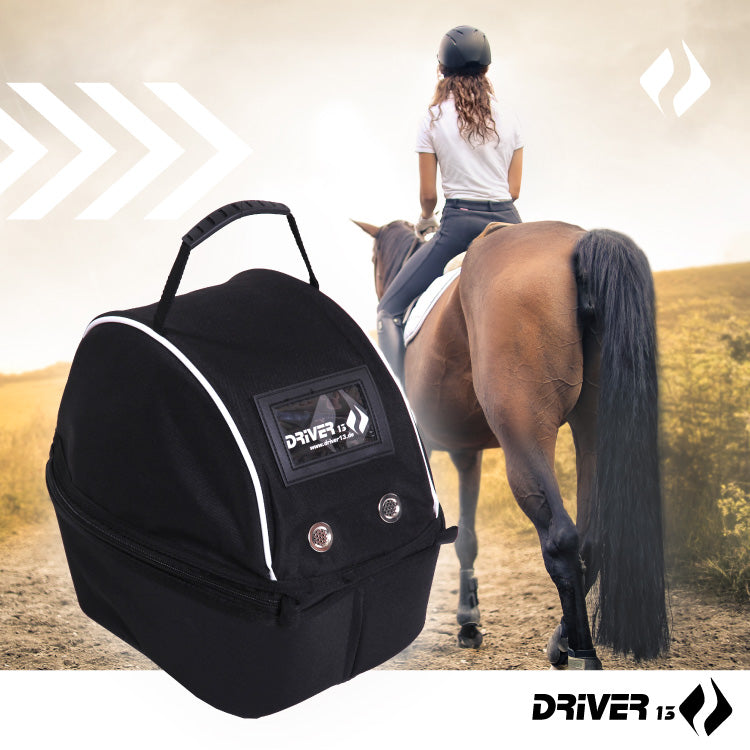
For combined transport, a coordinated solution is practical. A helmet bag protects the helmet separately, while a grooming bag holds brushes and care products. This turns individual parts into a clearly organized system. Driver13 focuses precisely on this sport-specific separation in sports luggage, so that sensitive, dirty, and bulky equipment gets its proper place.
Choosing the bag to suit the use
For weekly riding lessons, a low self-weight, sufficient space, and easy cleaning are especially important. The bag is carried frequently, placed in the car, and stored at home again. Here, a functional standard solution is usually more sensible than an elaborate tournament bag with a lot of extra volume.
At tournaments or training camps, the requirements increase. The boots should remain protected over several days, accessories must be at hand, and the bag is moved more often over various surfaces. A reinforced bottom, separate compartments, and a comfortable shoulder strap pay off particularly well then. Anyone who regularly travels with several pairs should rather use two clear bags than one overfilled solution.
In winter, moisture is an additional factor. Wellington boots or heavily soiled stable boots have different requirements than high-quality leather boots for the arena. For rubber, a washable interior is practical. For leather boots, shape protection, separate compartments, and sufficient airing out are more important. A bag can do both, but not every model is equally suitable for every use.
Properly caring for a riding boot bag
Regular care keeps the bag ready for use. Remove sand, straw, and hair from the interior before they become firmly embedded. On the outside, a damp cloth is usually sufficient. For heavier soiling, you should follow the manufacturer's care instructions, especially for coated materials or padded inserts.
Let the bag dry open after damp training days. Zippers stay easy to use longer if they are free from sand and dust. Occasionally check the seams, straps, and bottom, because small damages can be detected earlier than a torn seam on the parking lot.
The right riding boot bag does not have to stand out. It should work exactly when time is short, the boots are dirty, and the equipment needs to go safely along to the next ride.


